Latest Innovation Management Thesis Topics:
Innovation management is the process of supervising and directing the development, design, and application of new concepts, services, or procedures. It is because there always is a possibility of something new and better coming up. However, the basis of this new perspective can only be implemented after a proper conduction of research.
Don’t know how to conduct research within the field of innovation management? Well! Our experts are here to assist you with your research projects by exploring the topics related to the core principles of the field along with many other aspects of innovation management. The foundational principles with which our researchers provide Best Dissertation Topics assistance include:
- “Culture of Innovation” dissertation topic selection:This is the principle of innovation management that fosters a culture where creativity is encouraged. Our researchers explore different aspects of this field including the promotion of open communication, risk-taking, etc to assist students with their topic selection.
- “Leadership Support” dissertation topic selection: Strong leadership is crucial for innovation. Our highly qualified experts have helped 1500+ students in the relevant field of innovation management.
- “Resource Allocation” dissertation topic selection: This core concept discusses the allocation of the necessary resources to support innovation projects. Our team of experts conducts research on resource allocation for Innovation Management Research Topics selection.
- “Cross-Functional Collaboration” dissertation topic selection: Innovation often thrives when individuals from different disciplines collaborate. Cross-functional teams bring diverse perspectives and skill sets to the table, enhancing the creative process. We provide the latest dissertation topic assistance to students within this area of study.
Aim: Investigate effective strategies for overseeing innovation within developed economies in the digital era.
Objectives:
- Examine the potential influence of digital transformation on innovation management.
- Analyze key drivers and barriers to innovation in the digital economy.
- Identify successful instances of innovation implementation in digital context landscape.
- Develop improved recommendations for enhanced innovation capabilities in digital economies.
- Analyze the potential impact of digital economic systems on innovative dynamics of organizations.
Aim: Exploring the role of corporate foresight practices influence and improve innovation management in organizations.
Objectives:
- Study the role of corporate foresight in recognizing the future innovation opportunities.
- Investigate the integration of foresight into innovation management processes within organizations.
- Analyze the potential impact of innovation-driven foresight on organizational performance.
- Develop improved recommendations for enhanced innovation capabilities in digital economies.
- Provide guidelines for efficiently incorporating corporate foresight into innovation practices.Investigate examples showcasing progressive outcomes of innovative initiatives.
Aim: Examine the impact of resource limitations on innovation management, with specific focus on the UK craft industries.
Objectives:
- Assess how a resource constraint affects innovation process and resulting outcomes in craft businesses.
- Investigate technological role in effective craft-business workflows.
- Recognize innovative strategies and recommendations that enable resource-constrained organizations to thrive.
- Analyze the impact of technology driven innovation standards and effectiveness of craft related organizations.
Aim: Systematically examine the framework of innovation management in the digital age, with an emphasis on the perspectives of UK organizations.
Objectives:
- Discover vital components of effective innovation framework customized for digital era.
- Examine how UK organizations adapt to the challenges and capitalize on opportunities within digital innovation management.
- Assess the interconnectedness between digital adoption and achieving innovation success.
- Provide perspectives and exemplary practices
Aim: Shed light on methods of innovation management practices within construction firms and their implications for the sector.
Objectives:
- Define prevalent innovation processes and practices adopted by construction organizations.
- Explore the influence of innovation on project safety measures, efficiency, and environmental sustainability.
- Evaluate the obstacles and opportunities for cultivating a culture of innovation within the construction industry.
- Recommend actionable strategies to enhance innovation management across the construction landscape.
Warning: session_start(): Session cannot be started after headers have already been sent in /home/dissertations/public_html/inc/lead-form.php on line 2
Get 3+ Free Dissertation Topics within 24 hours?
Aim: Explore the utilization of technology harnessed to manage driving innovation processes within the UK healthcare industry.
Objectives:
- Examine the role of technology in the enhancement of healthcare processes and standard of patient care.
- Explore the benefits and challenges associated with implementing technological innovations in healthcare.
- Analyze the impact of process innovation on patient outcomes and organizational efficiency.
- Offer practical strategies for effective technology-driven innovation in healthcare.
Aim: Analyze the outcomes and consequences of innovation management practices within healthcare industry of United Kingdom.
Objectives:
- Evaluate the influence of innovation on healthcare standards, accessibility, and cost-effectiveness.
- Examine the role of innovation in addressing healthcare challenges and enhancing patient outcomes.
- Analyze the adoption and dissemination of innovative healthcare strategies and technologies.
- Provide suggestions for optimizing innovation management within the UK healthcare sector.
Aim: Analyze a case study on organizations that implement strategic innovation management to comprehend its impact on cultivating shareholder confidence.
Objectives:
- Explore how strategic innovation management strategies impact shareholder trust and perceptions.
- Evaluate case studies of organizations that have successfully boosted shareholder confidence through innovation.
- Analyze the alignment of strategic innovation with overarching business goals and financial performance.
- Present practical guidance for firms to elevate innovation for enhanced shareholder relations.
Aim: Investigate the intricate role of innovation management in marketing within the domain of marketing, specifically in the context of collaborative enterprise development.
Objectives:
- Investigate how marketing innovations contribute to collaborative enterprise competitiveness, market expansion and overall growth.
- Assess effective collaborative marketing practices and their impact on innovation.
- Explore the challenges and prospects in integrating marketing and innovation management.
- Provide actionable suggestions for optimizing marketing innovations in collaborative environment.
Aim: Examine how innovation management impacts human resource practices in the hospitality sector.
Objectives:
- Assess the relationship between an innovative culture and HR practices in the hospitality industry.
- Evaluate the impact of innovative HR strategies on employee satisfaction, retention, and guest experiences.
- Investigate case studies of innovative HR initiatives within hospitality sector.
- Offer best practices for harmonizing innovation and HR in the hospitality industry.
Aim: Conduct a critical assessment of entrepreneurial perspectives on innovation and draw comparisons between developing and developed economies.
Objectives:
- Examine the mindset, attitudes, motivations, and actions of entrepreneurs in relation to innovation.
- Compare and evaluate variational entrepreneurial perspectives on innovation between developing and developed economies.
- Assess the pivotal role of innovation in entrepreneurial achievements and its consequential influence on economic development.
- Provide suggestions for cultivating innovation-centric entrepreneurship globally.
Aim: Undertake an academic exploration of the historical development of innovation management, spanning from year 1980s to the 2000s.
Objectives:
- Document substantial milestones and trends in the field of innovation management during the specified time frame.
- Analyze how historical events and technological advancements influenced the paradigms of innovation.
- Investigate the development of innovation frameworks, theories, and best strategies.
- Provide insights into the historical events that have shaped contemporary innovation management.
Aim: Conduct a comprehensive critical analysis of innovation management practices within the United Kingdom's manufacturing sector.
Objectives:
- Analyze the contemporary state of innovation adoption and maturity in the UK manufacturing sector.
- Assess the impact of innovation on manufacturing sustainability, productivity, competitiveness, and growth.
- Investigate industry-specific challenges and prospects associated with innovation management in UK.
- Recommend practices for enhancing innovation practices in the UK manufacturing industry.
Aim: Craft a systematic and comprehensive framework customized for efficient innovation management within the dynamic context of entrepreneurship.
Objectives:
- Define the essential elements of an innovation management framework designed specifically for the entrepreneurship market.
- Analyze different stages of entrepreneurship, demanding tailored innovation practices and approaches.
- Evaluate the practical effectiveness of the proposed framework through case studies.
- Provide guidance for entrepreneurs and startups navigating the multifaceted landscape of innovation.
Aim: Systematically examine the technical intricacies and strategic dynamics involved in the management of disruptive innovations.
Objectives:
- Scrutinize the technological drivers, challenges, and repercussions associated with disruptive innovations.
- Identify strategic approaches and decision-making processes crucial for effective disruptive innovation management.
- Analyze case studies illuminating both successful and unsuccessful practices for managing disruptive innovations.
- Provide insights and recommendations for organizations navigating the dynamic realm of disruptive innovation effectively
Order a Proposal
Worried about your dissertation proposal?
Not sure where to start?
- Safe and confidential process
- Free custom topics to choose from
- Any deadline
- Unlimited free amendments
- Free anti-plagiarism report
- Money-back guarantee
How to structure Innovation Management Dissertation Topics efficiently?
There are many essential factors that must be considered to make an innovation management dissertation topic an effective one. It is because your selected dissertation topic provides you with Online Dissertation Proposal Help formulation. However; if you want your dissertation title to be appropriately structured then you must consider;
Word count of the topic:
Although; there is no prescribed limit for a word count but the professionals prefer a word count of range from 8 to 15.This will keep the dissertation topic precise, concise, and will direct to the research question effectively.
Font of the topic:
The font selected for the dissertation topic must be according to the font of the rest of the project but Times News Roman is the most acknowledged one.
Main elements of the title page:
Maintaining originality is one of the most important aspects of a digital marketing dissertation topic selection. Otherwise; your whole work is going to be wasted because of the detection of plagiarism.
Main elements of the title page:
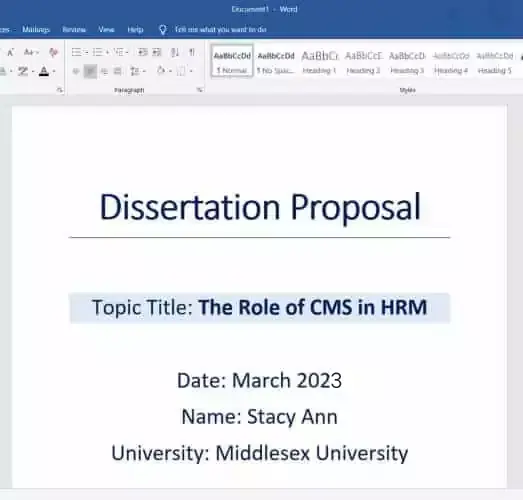
The title page of innovation management thesis topics mainly includes:
- Carefully crafted innovation management thesis topic.
- Name of the student/researcher.
- The type of document like dissertation, research paper, etc.
- The name of the department and institution.
- The degree program which can be Master of Arts, Bachelors of Science, etc.
- The date of submission.
How master thesis topics innovation management selection can affect the quality of your research work?
Don’t know how effective an innovation management topic can be for your research project? Payfordissertation can help you comprehend its importance. Selecting the right thesis topic is like choosing the foundation for a building as it sets the stage for everything that follows.
Natural Motivation and Engagement:
- Effect: When you are genuinely interested in your thesis topic, you are more likely to be intrinsically motivated.
- Impact on Quality: This motivation translates into dedication, contributing to the depth of your research. You are more likely to go beyond expectations when you are passionate about what you are studying.
Research Depth and Breadth:
- Effect: The scope of your topic influences how deeply you can delve into the specific area of study.
- Impact on Quality: A well-defined and focused topic allows for a more in-depth exploration. Clarity in scope ensures a balance between depth and breadth.
Originality and Contribution to Knowledge:
- Effect: The uniqueness of your thesis topic determines the originality of your contribution to the academic community.
- Impact on Quality:An original topic adds value to existing knowledge. It shows that your research is not merely replicating what others have done but is expanding the boundaries of understanding.
Methodological Suitability:
- Effect: Different topics may require different research methodologies.
- Impact on Quality:Choosing a topic that aligns with appropriate methodologies ensures the reliability and validity of your research. A mismatch between the topic and methods can lead to compromises in the study's quality.
Why payfordissertation is a perfect choice for Innovation Management Dissertation Topics selection?
If you are willing to take professional help from our team of experts then you have made a perfect choice, it is because:
Meets university’s guidelines and student’s requirements:
Our experts not only keep in mind the requirements of a respective university but also remember the requirements of students while executing the dissertation topic. We make it possible by executing customized topics after having thorough discussion with the student about his area of interest and university’s guidelines.
Assists with the outline formulation:
After providing the customized topic assistance to the students, we also help them by providing them with a general outline. You can base your project on the given outline or can Pay Someone To Do My Dissertation UK for further assistance. We offer guidelines in the form of;
- Research aims and objectives.
- Identification of gaps.
- Methodological approach.
- Free consultancy.
Incorporates essential variables:
An effective innovation management dissertation topic comprises dependent and independent variables to directly state the approach of the research work. Our highly qualified researchers craft such dissertation topics that incorporate all of the essential variables according to the educational level of the students.
Adds a new perspective:
We specifically formulate such innovation management dissertation topics that are original and exclusive. They add a new perspective to the existing area of study, hence; contributing effectively to the field.